Why Used Electric Vehicles in the UK Are Depreciating Rapidly — and What It Means for Buyers and Sellers
The UK’s electric vehicle (EV) market is undergoing a striking shift. Once the preserve of early adopters willing to pay a premium, used EV prices are collapsing — and a growing influx of affordable Chinese electric cars is at the centre of this transformation.
From crushing resale values to shifting consumer preferences and broader global supply trends, the depreciation of used EVs is reshaping one of the UK’s fastest-growing automotive sectors. In this article, I explore what’s driving this downward price pressure, how Chinese manufacturers are influencing the market, and what it means for drivers, dealers, and the future of electric mobility in Britain.
Used EV Depreciation: The Facts
Recent data from UK car retailers shows that the average price of a second-hand EV has fallen dramatically over the last few years. Once hovering around £39,000, average used EV prices are now closer to £20,000 — a drop of around £19,000 within three years. Analysts even predict that average prices could fall further toward £14,000 within the next year as supply continues to swell.
This sharp decline is not confined to one or two niche models. Across the market, traditional names like the Nissan Leaf, Renault Zoe, Tesla Model 3, and Volkswagen ID.3 have all seen significant depreciation. Some models have lost over a third — or even half — of their original value within just a few years of ownership.
Wider industry analysis concurs that EVs, in general, depreciate faster than equivalent petrol or diesel vehicles. Research shows that many used EVs hold dramatically less of their original price at resale than comparable internal combustion engine (ICE) cars — sometimes barely half after just 24 months.
Why Used Electric Car Prices Are Falling in the UK: The Impact of Cheap Chinese EVs

Take my particular case. I purchased new a Kia Niro EV4 back in October 2022. You can read my blog post here Kia Niro EV has finally arrived It cost me just shy of £42000 at that time. In January 2026 I had a trade in quote from Tesla for just £16421, and that with a low mileage of 12000 miles – a depreciation loss of over £25000 in just over 3 years – an horrendous amount.
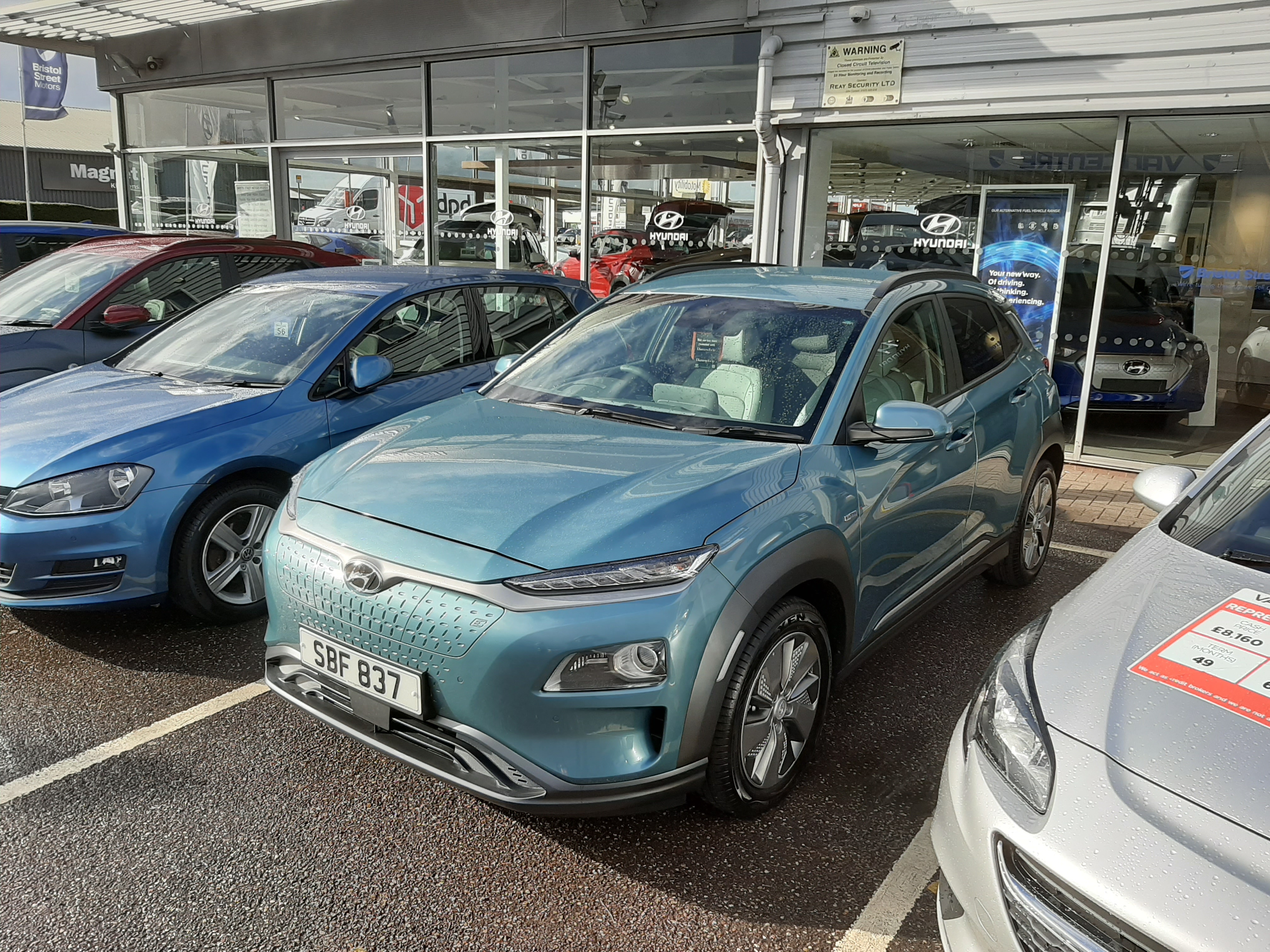
This was my first bad experience with an EV since 2017 as my first Nissan Leaf had next to no depreciation, my second Leaf was actually bought back by the selling garage after 12 months for the same price I paid new ( huge demand but limited supply meant they still sold it on at a profit! ) And then my Hyundai Kona EV had a great part exchange price after 3 years when I traded it in for my Kia. But read on…..
Chinese EVs: A Key Force in Depreciation
A major driver of this price pressure is the arrival and expansion of cheap Chinese electric cars in the UK market.
China’s automotive manufacturers are aggressively targeting Europe and the UK, using lower production costs and competitive pricing to establish a foothold. Chinese brands such as BYD, Leapmotor, GWM ORA, and others have rapidly expanded their lineup of sub-£30,000 EVs — increasing the number of affordable EV options in the UK from just nine to nearly 29 models within a couple of years.
This influx of lower-cost new EVs has a direct knock-on effect on the used market. First, it lowers the baseline price for new vehicles, meaning that even relatively new used EVs must adjust downward to stay competitive. Second, as early buyers trade up to newer or more advanced Chinese models, more used EV stock enters the market, further increasing supply and reducing prices.
In essence, cheap Chinese EVs are reshaping the UK second-hand market by providing alternatives that are both newer and more affordable. With UK tariffs on Chinese cars remaining at the standard 10% — well below some EU levels — there is little in the way of price deterrent, making the UK particularly attractive for imports.
Market Dynamics: Supply Outpaces Demand
While demand for used EVs has grown (some would argue due to cheaper tax incentives for companies to buy EV’s) — with sales rising sharply year-on-year — the surge in supply has been even stronger.
The Society of Motor Manufacturers and Traders (SMMT) reported that tens of thousands more used electric vehicles were changing hands in 2024 and 2025 than in previous years. This “explosion” in used EV sales reflects both increasing affordability and a wider choice of models, but it also means that stock levels at dealer forecourts have ballooned.
Dealers now face a classic supply-and-demand imbalance: plenty of second-hand EVs available but demand that hasn’t kept pace. The result is a buyers’ market, where prospective owners can pick up EVs at significantly lower prices rather than stretch to expensive new models.
This seasonal pressure has been compounded by aggressive new-car price promotions and incentives from manufacturers, which can divert some demand away from the used market — particularly for price-conscious buyers.
If you want a more human view of the situation for car dealers (wait, am I showing too much sympathy for them here!) watch this video from an ex motor trader called Barry Crompton.
Changing Buyer Preferences
One notable consequence of the influx of Chinese EVs and steep depreciation is a shift in UK consumer sentiment.
In the past, brand loyalty and “badge snobbery” often influenced buyers to stick with well-known European or Japanese marques — even at higher prices. Today, that loyalty is weakening. Surveys indicate that a majority of British motorists are now open to considering Chinese EVs, despite relatively low brand awareness compared with long-established brands.
Younger drivers, in particular, are drawn to lower entry prices and the latest tech features — areas where many Chinese models compete strongly. These trends suggest that the used EV market is not just suffering depreciation; it is also reshaping who buys EVs and what they value.
Batteries and Beyond: Technical Factors in Depreciation
Depreciation in used EVs isn’t driven solely by market supply and competition. Technical concerns also play a part — most notably around battery health and long-term ownership costs.
While EV batteries have improved considerably over the past decade, older vehicles still carry some uncertainty in potential battery replacement costs or reduced range. Many buyers factor these concerns into resale prices, applying a risk discount compared with petrol and diesel cars with well-understood longevity.
This technical depreciation effect can be particularly acute for early-generation EVs or smaller battery cars — examples where rapid advances in technology have quickly rendered older models less desirable.
What This Means for the UK Market
For Buyers
Opportunity to buy cheap: Used EV prices now rival, or even undercut, those of equivalent petrol and diesel cars — a major shift from just a few years ago.(But be aware of the resale value you will get when it comes time to sell)
More choice: A wider selection of models — including Chinese brands — means more options for budget-conscious buyers.
Consider battery health: Prospective owners should check battery condition and warranties carefully, as this impacts long-term value. Only buy from a dealer who can demonstrate battery health.
For Sellers
Expect lower resale values: Sellers of used EVs should be realistic about market expectations, with depreciation faster than many traditional cars! (Many smaller dealers will no longer part exchange an EV for an ICE vehicle!)
For Dealers
Managing stock: High EV inventory requires strategic pricing and marketing to avoid stuck stock and margin squeeze.
Educating customers: Dealers can differentiate by offering value-added inspections, warranties, and battery checks.
The Road Ahead
The UK’s transition to electric vehicles is far from over. While depreciation challenges remain, they are part of a broader evolution — one that could ultimately make EVs mainstream and accessible for more drivers. Cheap Chinese imports have accelerated this process, while widening consumer choice.
However, this shift also poses questions about brand equity, long-term residual values, and the role of government policy in shaping the balance between open markets and domestic industry competitiveness.
Government Policy
Crazy Ed Milliband and this Governments green agenda some would say is to blame – check out the views of Barry Crompton on this subject in his video here.
What’s clear is that the used EV market in the UK — once niche, then overheated — now reflects a more competitive environment. For buyers and sellers alike, understanding these dynamics will be key in navigating a marketplace that’s changing as fast as the technology that powers it.
And what have I decided to do?
Go back to petrol?
No I am sticking with my Kia for now as it has a 7 year general warranty and an 8 year battery warranty. I still get cheap rate electricity overnight in winter and for 6 months of the year free solar energy so my depreciation loss is slightly offset by this. However the government has not helped by adding vehicle excise duty of £195 per year to my costs and of course the proposed 3p a mile tariff due to be imposed by Rachel (from accounts) Reeves in the coming years.
I took to EV’s after ditching my dirty diesel as they were cheaper to run and did not contribute to the 40000 premature deaths each year by particle pollution in the atmosphere. In my case apart from depreciation nothing else has changed. I shall mitigate that depreciation by keeping the Kia long term as it is a really good car to drive. Who knows where the market might be in another 3 years time.
you may have seen my video on this subject on YouTube…
Let me know your views in the comment section below…….



Leave a Reply